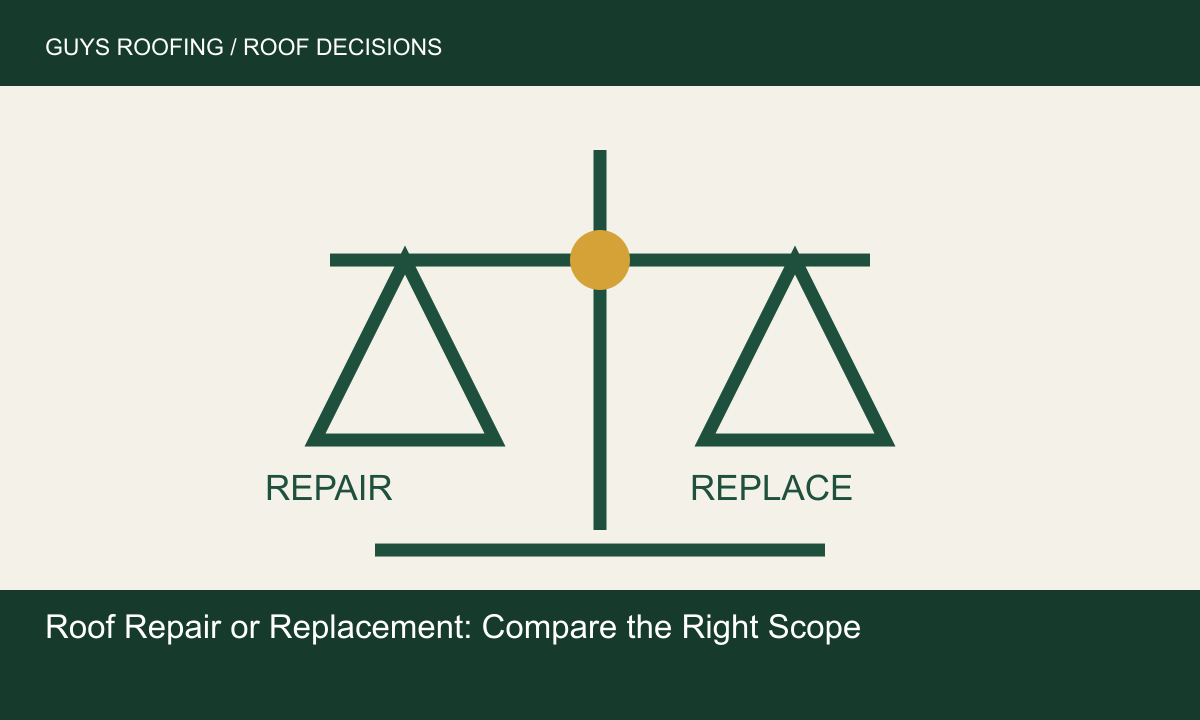
The choice between roof repair and replacement should follow the roof’s condition, the extent of the problem, and what each proposed scope is expected to achieve. A defined defect may be a repair discussion, while widespread deterioration can make replacement the more relevant option. Roof age is background information, not a complete diagnosis. Before comparing prices, ask each contractor to explain the findings, identify the work area, and describe what remains uncertain. This changes the decision from choosing a reassuring label to comparing two specific plans for the same building.
What question should the assessment answer?
The assessment should explain what is wrong, where it occurs, and how much of the roof is affected. A roof is a system of covering, underlying components, junctions, edges, and penetrations. One visible defect does not necessarily describe every part of that system. Ask whether the surrounding areas appear serviceable and which observations support the recommendation. If access is limited, ask what cannot yet be confirmed. GAF’s repair and replacement guidance connects the decision with the extent of damage, which is more useful than applying a single age rule to every property. Keep the explanation with the estimate so another proposal can be compared against the same evidence.
When is a focused repair a useful conversation?
A focused repair is worth discussing when the concern can be tied to a defined area and the surrounding system can support the proposed intervention. The contractor should identify the defect and explain what the repair is intended to resolve. Ask how compatible materials and adjoining details will be handled. A limited scope can be useful without implying that the entire roof has been renewed or that unrelated areas are covered. If a similar problem has returned, ask why the new proposal differs from the earlier work. The useful answer is specific to the findings, rather than an assurance that another patch will certainly solve every future leak.
When does replacement become the more relevant option?
Replacement deserves discussion when the findings indicate broader deterioration, extensive damage, or a system condition that a limited repair would not adequately address. Ask which roof areas support that conclusion and whether the proposal covers the whole building or a defined section. GAF notes the distinction between localized problems and significant wider issues, but that general guidance does not determine the outcome at a particular property. A replacement recommendation should explain the proposed system, preparation, and relevant junctions. It should also state the expected purpose of the work without promising a universal service life. Ask what would be left unchanged and how that affects the result.
Compare the boundaries before comparing the price
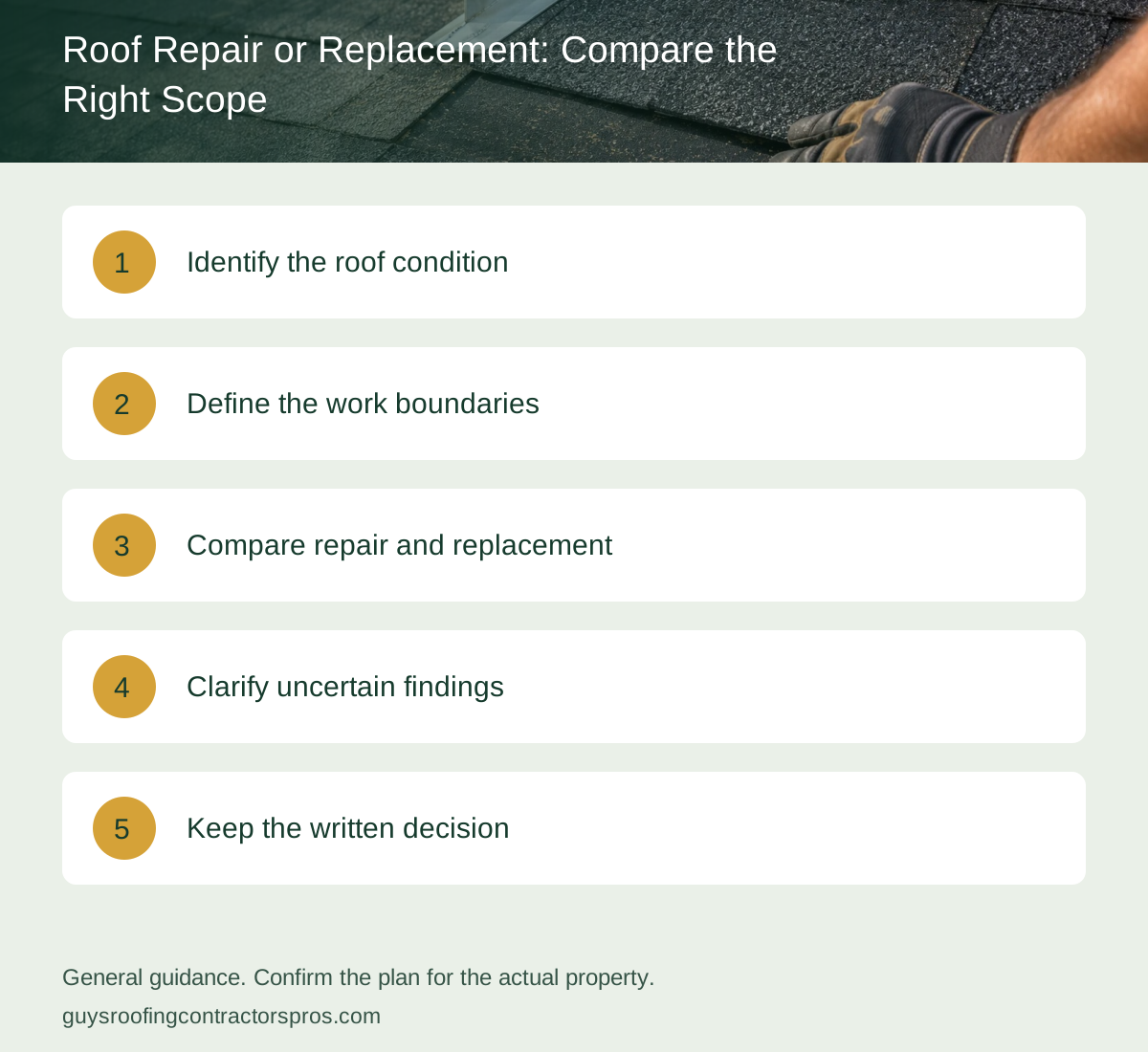
Place the proposals side by side and mark the roof areas, removal or preparation, materials, adjoining details, disposal, access, and exclusions. If one estimate covers a small repair and another covers a complete renewal, the totals are not evidence that one contractor is overcharging. They describe different work. Ask each contractor to clarify the boundary and the condition behind it. The Federal Trade Commission’s home improvement guidance supports comparing written estimates and checking contractor information before committing to a project. Keep the comparison focused on what you can verify, including the actual product or system, rather than promotional terms that do not define a measurable scope.
How should uncertainty appear in the agreement?
Concealed conditions may remain unknown until work opens the roof. Ask how additional damage will be documented and how a proposed change will be priced and approved. A realistic agreement makes uncertainty visible rather than treating every possible finding as either included or impossible. Clarify who can authorize a change if the primary owner is unavailable. Keep a record of agreed changes with the original scope. This matters for a small repair as well as replacement, because the amount of roof opened and the nature of the finding can alter the work. A clear process is more useful than a vague statement that everything will be handled later.
Consider disruption and the property’s next decisions
The work affects more than the roof surface. Discuss occupied rooms, parking, delivery access, pets, operating activity, and other trades that may alter the roof. If the property needs association approval for a material or appearance change, establish that before committing to a system. Ask who checks local project requirements and how inspections will be coordinated where applicable. Think about planned additions or rooftop equipment that could change the scope. These details do not automatically favor repair or replacement; they help define a plan that fits the building. Do not let a preferred date replace the need to resolve the technical and access questions first.
Read product and workmanship terms separately
Request the written coverage documents that apply to the proposed work. Product coverage and contractor workmanship terms may address different things, have different conditions, or require particular records. A broad verbal use of the word warranty does not explain those limits. Ask what is covered, what is excluded, and what maintenance or notification requirements apply. Do not assume a repair carries the same coverage as a new installation. Keep the final work description and relevant documents together after completion. This guide does not promise a particular warranty from Guys Roofing Contractors; the office must confirm the actual terms attached to your project before you rely on them.
Choose by the explanation you can check
A useful decision record has four parts: the observed condition, the reason for the recommended scope, the written work boundaries, and the agreed next step. If one of those parts is unclear, ask for clarification before accepting the proposal. You do not need to decide from an online age chart or diagnose the roof yourself. For a Central Florida property, the Guys Roofing Contractors replacement and repair pages explain the questions to bring to the local office. Start with the property address and concern, then ask which assessment is appropriate. The final choice should follow evidence from the actual building and a scope you understand. Keep the written comparison with the property records so a later decision can use the same evidence.
For the property-specific next step, discuss roof replacement with the office shown in the Central Florida location directory. More preparation advice is available in the Blog.