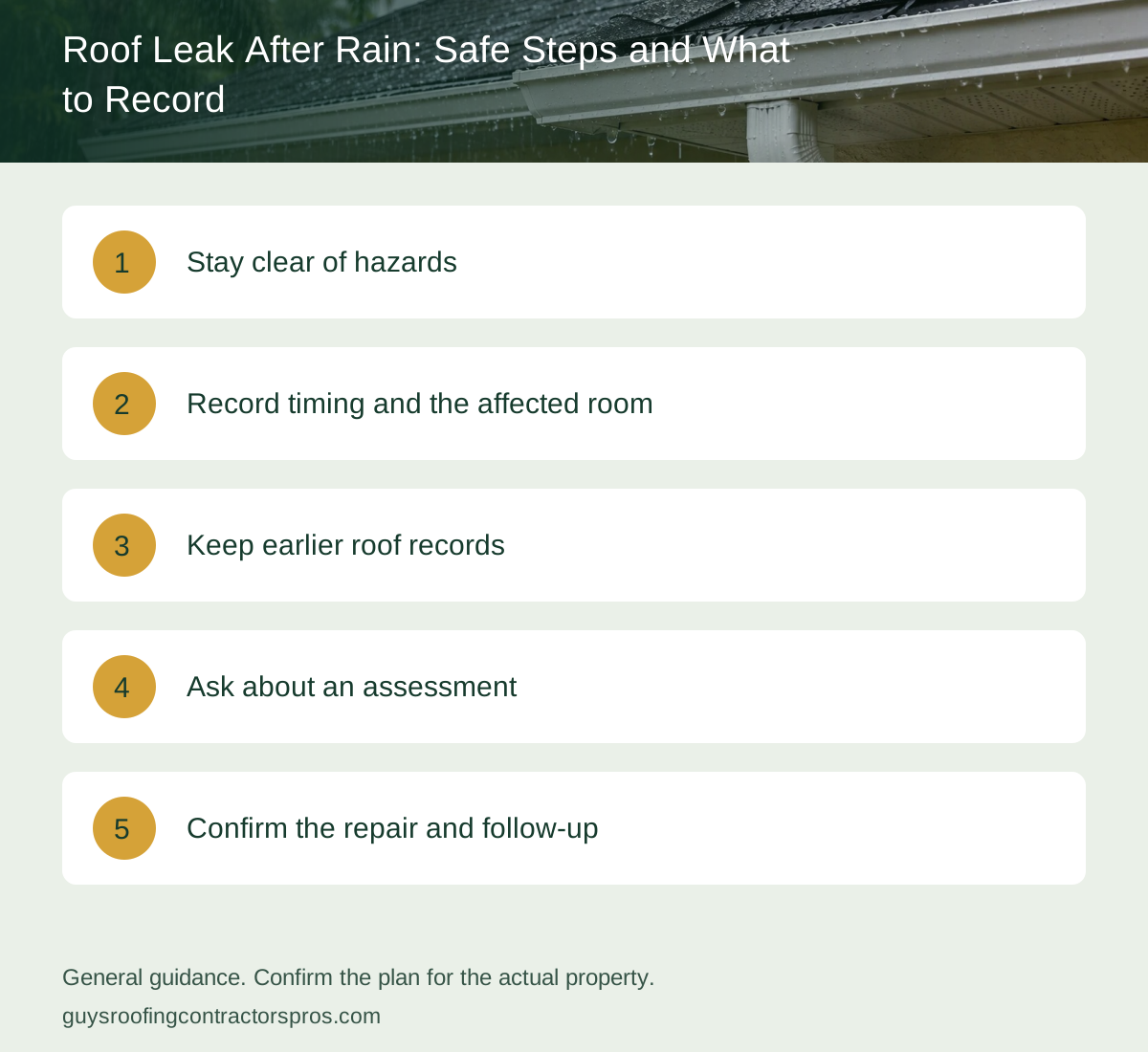
A roof leak after heavy rain needs a safe response first and a source assessment next. Keep people away from electrical hazards or an unstable ceiling, record the changes you can observe without approaching danger, and contact the local roofing office. A ceiling stain identifies a moisture concern, but it does not establish the roof entry point or prove that replacement is necessary. The useful goal is to explain what happened clearly enough for a professional to assess the building. You do not need to climb onto the roof or test a repair product before making that call.
What should you do before investigating the leak?
Stay clear of damaged ceilings, electrical fittings near water, and any area that appears structurally unsafe. If there is an immediate safety threat, contact emergency services or the relevant utility rather than waiting for a roofing appointment. Do not investigate outside during lightning or strong wind. The National Weather Service’s thunderstorm guidance is a useful safety reference when weather is still active. If you can safely keep occupants away from the affected space, do so without entering a hazardous area. The first decision is whether the building can be used safely, not whether a particular roof product might stop the water. Explain any known hazard when contacting the roofing office so the situation is understood before access is discussed.
Record the time, room, and visible change
A short event record can make the later assessment more useful. Write down when you first saw the mark or water, which room it affected, and whether the condition changed during the rain. Note a nearby exterior wall or another easy landmark inside the building. Use photographs only from a safe position. A photograph of the whole room can provide context that a close-up alone may miss, while a later photograph can show whether the mark changed. Keep the original files and avoid altering them to exaggerate the concern. These observations are not a diagnosis; they help explain the sequence without requiring the assessor to reconstruct it from a vague recollection.
Why can the ceiling mark differ from the entry point?
Water may move along building components before it becomes visible inside. A mark beneath one roof area can therefore have a source at a different detail, and a recurring stain may have more than one contributing condition. Roof covering, junctions, penetrations, and adjoining parts of the building can all become relevant to an assessment. GAF’s repair and replacement guidance recommends a professional review of roof concerns and cautions against climbing onto the roof. Treat the interior location as evidence to share, rather than a target for an assumed patch. Ask the assessor what findings connect the proposed repair to the reported water entry and which uncertainties remain before the work is opened up.
Keep the earlier roof history with the new evidence
Find earlier repair scopes, invoices, installation information, and photographs if you already have them. The aim is to identify what changed, not to produce a perfect maintenance archive before calling. Note whether the same room was affected before, whether a nearby addition or equipment change occurred, and whether anyone has applied a product to the area. Separate facts you know from estimates such as an approximate roof age. Do not assume the most recent weather event caused every defect that is later discovered. A clear timeline lets the assessor compare present findings with previous work and explain why a different approach may be needed if an earlier repair did not resolve the concern.
What should you ask about temporary protection?
Ask whether a temporary measure is appropriate, what it is intended to protect, and whether it is currently available for your address. Temporary protection is not automatically a completed permanent repair. A professional should explain the limitations and the later assessment or work that remains. Do not climb onto a wet or damaged roof to place material yourself. Confirm fees and authorization before work begins, and keep the description of temporary work separate from the final scope. If the office cannot arrange an immediate response, ask what safe information to record and how to report a change. A website opening-hours label is not an arrival-time promise, so current availability must be confirmed directly.
Compare the proposed repair with the actual concern
A useful repair proposal identifies the affected roof detail, the work area, the material or method proposed, and the result it is intended to achieve. Ask whether the surrounding roof condition changes the recommendation. If a broader replacement is suggested, request the findings that support that scope and whether a focused repair has a practical role. GAF distinguishes localized damage from wider deterioration; that distinction should be explained for the actual building. Avoid choosing solely by the smallest visible stain or a headline price. Two estimates may describe different work, so compare their boundaries, exclusions, and treatment of additional findings before treating them as equivalent offers.
Prepare a clear call to the local roofing office
Use this order for the first conversation: property address, callback number, current condition, timing, and access. State whether water is still entering and whether occupants are safe. Explain who can authorize a visit and who can provide entry if those are different people. Ask what assessment is proposed, whether a fee applies, and how the findings will be shared. Guys Roofing Contractors lists nine Central Florida contacts with separate hours and numbers. The city directory helps identify the right one, while the roof repair page explains the scope questions in more detail. Keep your event record after the initial call; it remains useful when reviewing the recommendation and documenting the completed work.
Turn the observations into a follow-up plan
Before ending the conversation, confirm who will contact you next and which number to use if the situation changes. After assessment, keep the written findings, photographs provided by the contractor, and any agreed scope together. If work proceeds, request a final description and note any remaining recommendation rather than assuming every related building issue was included. The practical outcome is a documented path from the reported leak to the identified defect and the work authorized. That record can support future maintenance without requiring you to remember technical details years later. Use the related roof repair service page and your local contact to discuss the property-specific next step.
For the property-specific next step, discuss roof repair with the office shown in the Central Florida location directory. More preparation advice is available in the Blog.