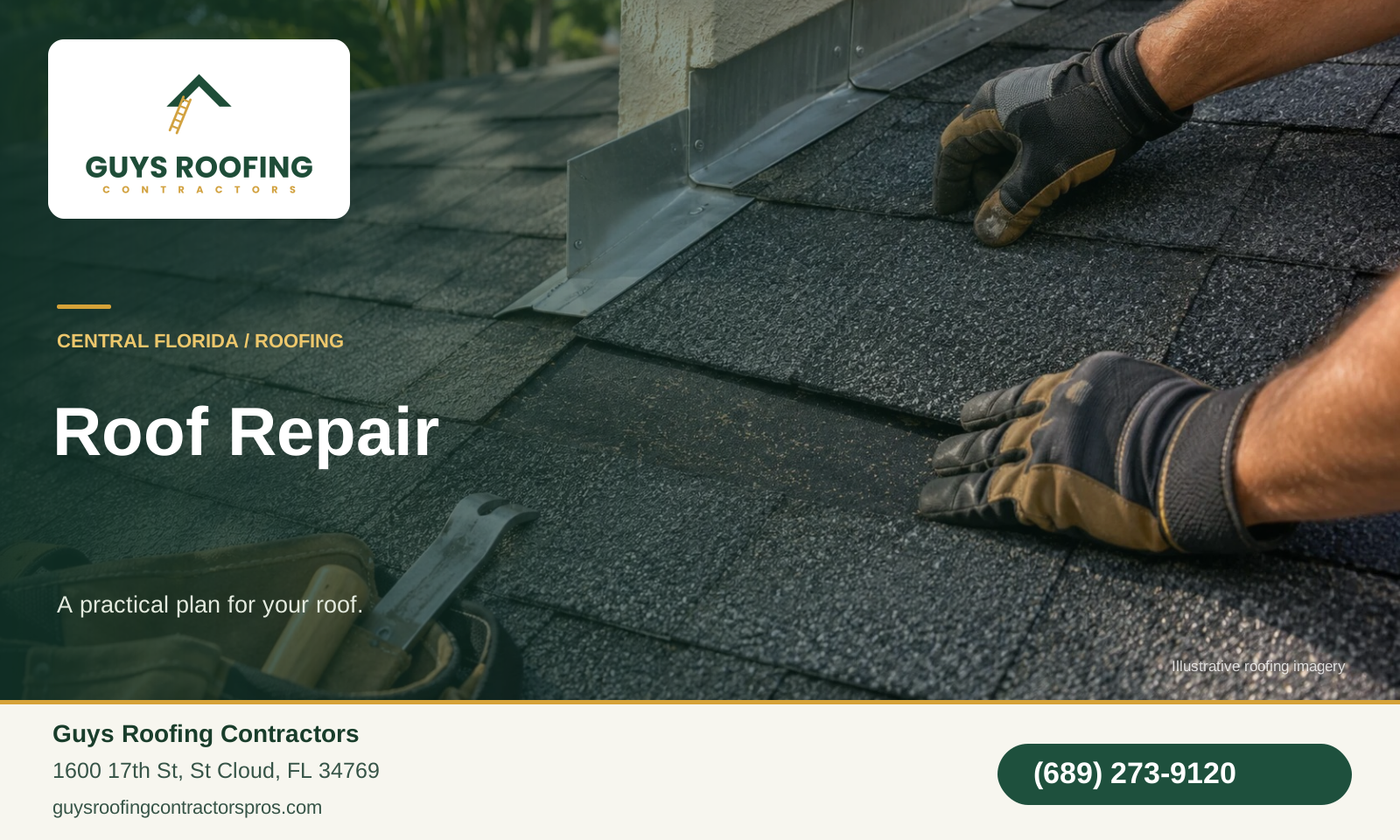
Roof repair addresses a defined roof problem, such as damaged covering, a leaking junction, or deterioration around a penetration. Guys Roofing Contractors accepts repair inquiries across its listed Central Florida locations. Start with what you can observe safely and let the local office confirm an appropriate assessment.
Find the source before choosing the repair
A ceiling stain shows where water became visible, which may be different from where it entered the roof. Water can travel along framing or other surfaces before appearing indoors. Tell the office whether the stain grows during steady rain, wind-driven rain, or after a particular event. Note the room, the nearest outside wall, and whether the area has been repaired before. These details give the assessor a clearer starting point without asking you to diagnose the roof. Avoid treating a surface patch as proof that the original source has been resolved.
What a useful repair assessment should explain
Ask which roof area is damaged, what condition surrounds it, and what evidence connects that defect to the reported problem. A clear proposal should identify the material or detail being repaired and the limits of the work. Flashing, penetrations, edges, and roof-to-wall junctions may need different approaches. The assessor should explain any concealed condition that cannot be confirmed until access is available. If the proposal includes interior repairs, drainage work, or removal of damaged material, have those items listed separately so the roofing scope remains easy to understand.
Compare a focused repair with a larger scope
A localized defect and a broadly deteriorating roof call for different conversations. Ask how much serviceable material surrounds the problem, whether similar defects occur elsewhere, and what the repair is expected to accomplish. Recurring leakage deserves an explanation of why the previous work did not resolve it. A repair recommendation should not rely on roof age alone, and replacement should come with its own condition evidence. If the work exposes additional damage, agree in advance how findings will be documented and how a change in scope will be authorized.
Prepare the property and keep a useful record
Save photographs of visible changes, earlier repair invoices, and any product or installation records you already have. Keep a short timeline rather than relying on memory during the visit. Tell the office about gates, pets, parking restrictions, and occupied rooms beneath the concern. Do not climb onto a wet or damaged roof to gather evidence. After the work, request a description of what was repaired and any recommended follow-up. Keep the final scope with your property records so a later contractor can understand the history.
General roofing guidance: GAF repair and replacement guidance. A professional should assess the actual property.
Compare the related repair or replacement guide and explore the complete roofing service directory when planning the next question.