A useful roof maintenance checklist helps you notice changes safely, record them clearly, and ask which tasks the actual roofing system needs. It should not send you onto the roof or encourage the same cleaning product, coating, or schedule for every building. Start with ground-level observations and interior changes, keep earlier work records, and discuss developing concerns with a roofing professional. Active water entry belongs in a repair conversation rather than waiting for a routine upkeep date. The goal is a history that supports decisions, not a checklist that claims to certify the roof’s condition.
Begin with a safe observation routine
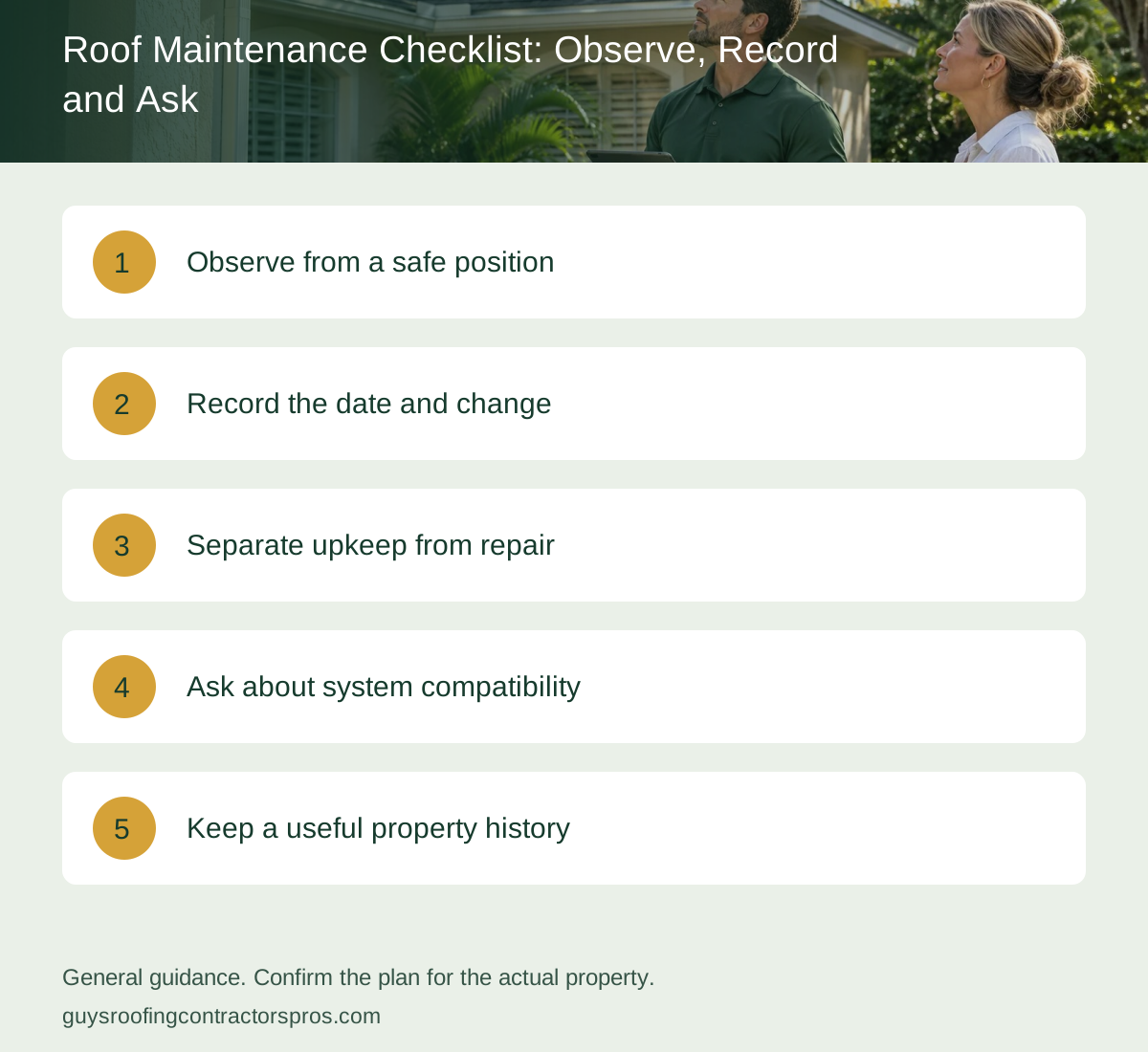
Choose a safe position on the ground or inside the building and look for changes you can describe without approaching danger. Note visible material damage, unusual debris, a changed runoff pattern, or a new interior mark. Do not climb onto the roof to complete a list, and do not work outside while lightning or severe weather threatens. GAF’s guidance on roof concerns recommends professional assessment and cautions against climbing onto the roof. The National Weather Service provides a separate reference for thunderstorm safety. Your observation routine should respect both limits: it can identify a reason to ask a question without becoming a roof inspection or an unsafe maintenance task.
What changes are worth writing down?
Record the date, the part of the building, and the change you noticed. A photograph from the same safe viewpoint can help distinguish a new condition from an older one, but a photograph is not required before reporting a concern. Note whether the observation followed heavy rain, wind, nearby building work, or another event. Keep the event separate from a conclusion about its cause. A small record might say that a mark appeared in a room after rain and was larger the next morning. That is more useful than an unsupported diagnosis. Include enough context to locate the concern without adding sensitive occupant information that the contractor does not need.
Keep drainage observations connected to the roof
Runoff and roof edges are part of the building’s water-management discussion. From a safe position, note a change in where water goes or where debris appears. Ask a professional which drainage components and adjoining roof details need review. Do not assume a visible overflow establishes a single cause or that a roofing maintenance visit automatically includes every gutter or drainage service. The written scope should identify the proposed task and responsible party. If work on another part of the property changes a drainage route, mention that history. A useful maintenance conversation considers the relationships between components instead of treating the roof covering as an isolated surface.
Separate monitoring, maintenance, and repair
Some observations call for a record and follow-up; others require a defined repair assessment. Ask the professional to explain which category applies and why. Maintenance should not be used as a reassuring label for an active leak or damaged system. A proposed task should state what it addresses, what it leaves unchanged, and which sign should prompt another call. If a concern returns after earlier work, bring that scope and timeline to the discussion. Avoid repeating a product application solely because it was used before. The current condition and the reason the earlier task did not resolve the concern should inform what happens next.
Should every roof receive the same cleaning treatment?
No single cleaning or coating approach is appropriate merely because a surface looks dirty or weathered. Ask which roofing system is present, what the product guidance allows, and whether cleaning is the task that the condition actually needs. A forceful method or incompatible material may create another problem or obscure useful evidence. Do not treat a maintenance advertisement as a specification for your roof. If a coating is proposed, ask about preparation, compatibility, limitations, and how the underlying condition was assessed. Keep those answers with the scope so the decision is based on the system and purpose rather than a general claim that the roof will look newer.
Plan follow-up from the findings, not a universal interval
Ask the office how the system, condition, exposure, product guidance, and building changes affect the follow-up plan. This guide does not prescribe one maintenance interval for every Central Florida property. A roof with an unresolved concern or new equipment may need a different discussion from one with no observed change. Confirm the recommended timing and the signs that should prompt earlier contact. If a visit is planned, ask what access and records are needed. A schedule is useful when it follows a documented reason; it should not encourage delaying a developing problem simply because a routine calendar date has not arrived yet.
Build a property file that another person can understand
Keep installation information, prior repair scopes, dated observations, photographs, and completed maintenance records together. Identify the roof area involved in each task and retain relevant product documents. If a new manager or contractor becomes involved, the file should explain what happened without relying on one person’s memory. Record recommendations separately from completed work so a future reader does not assume every suggestion was carried out. After an authorized change, add the final description and the date. This creates continuity for the property and helps a later assessment focus on what has changed, rather than beginning with an incomplete account of earlier work.
Bring the checklist to a focused service conversation
When contacting Guys Roofing Contractors, give the property address and explain whether the request is routine upkeep, a new observation, or active water entry. Share the relevant history and ask what assessment is appropriate. The roof maintenance page explains scope questions, while the repair page addresses a defined problem that needs diagnosis. The local directory gives the correct phone and published opening hours for the property’s city. Use those contacts to confirm coverage and current availability. A good checklist ends with a clear question and the right next step; it does not claim the roof is safe, repaired, or guaranteed simply because the boxes have been checked.
For the property-specific next step, discuss roof maintenance with the office shown in the Central Florida location directory. More preparation advice is available in the Blog.