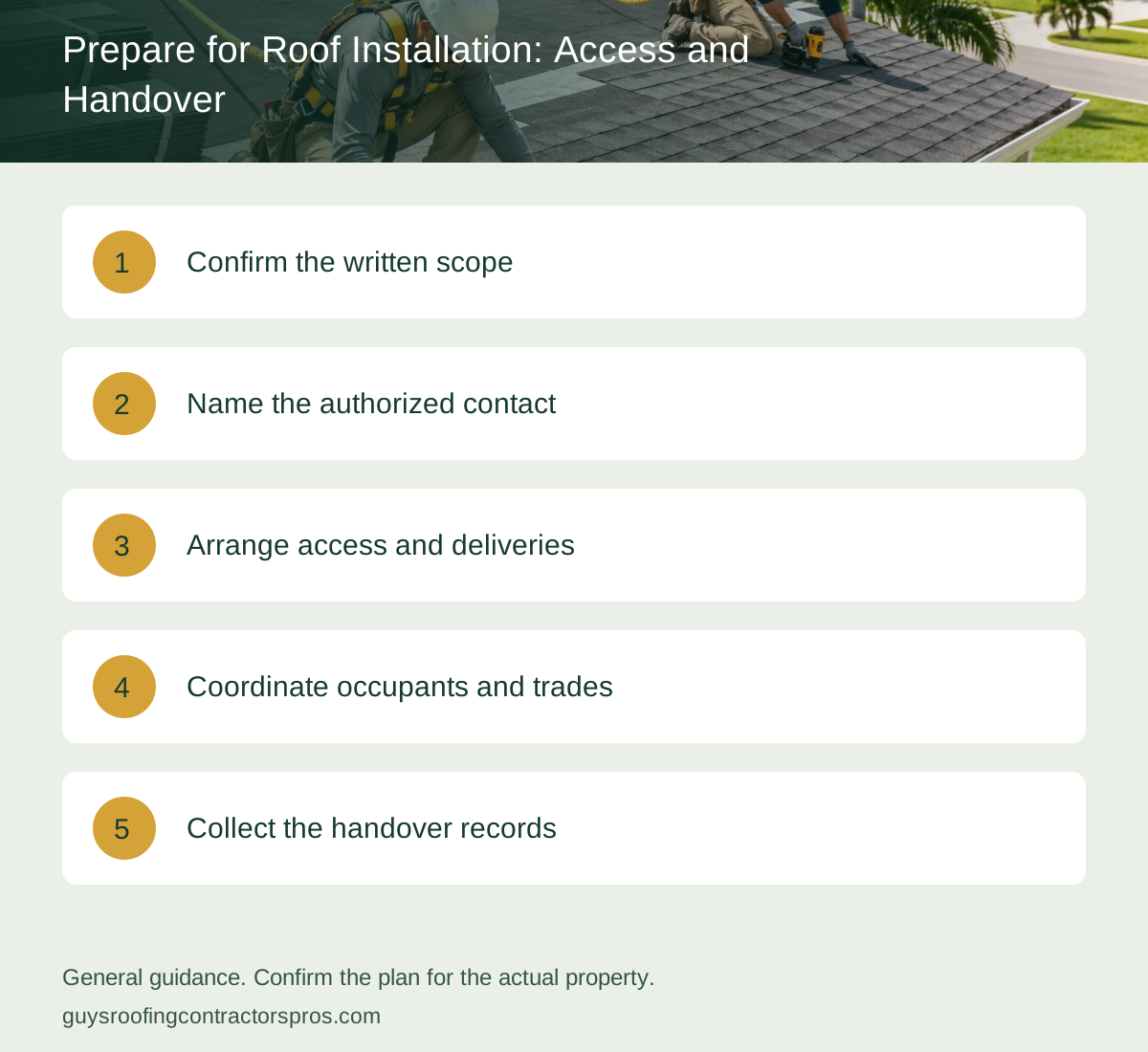
Prepare for roof installation by confirming the written scope, site access, occupant arrangements, deliveries, and the person who can approve a change. Ask the roofing office which property-specific steps are needed before work begins. Preparation should follow the actual building and proposed system rather than a generic promise that every job will proceed the same way. A clear plan makes it easier to coordinate the roof work with the home or business beneath it and to understand the records you should receive at handover.
Confirm the scope before preparing the site
Read the agreed proposal and identify the roof areas included, the intended system, preparation, and exclusions. If the work involves an addition or another new part of the building, confirm how it meets the existing structure and which parties are coordinating the details. Ask whether there are unresolved selections or approvals that affect the start. A property owner should not have to infer the roof system from a color sample or a brief product label. Keep the current scope available for the site contact so preparation is based on the work actually agreed, including any changes approved after the original estimate was written.
Who needs to be available for decisions?
Name the person authorized to approve work and provide a reliable way to contact them. That may differ from the person who can open a gate or admit the crew. If several owners or a property manager are involved, clarify who can approve a scope change and who needs an update. Do not assume a tenant or household member can authorize additional work simply because they are present. Ask how findings will be shared and whether photographs or another record will accompany a requested change. A defined contact arrangement helps avoid a delay caused by uncertainty over who can make the next decision while work is underway.
Arrange access, parking, and deliveries
Discuss where vehicles, materials, equipment, and removal containers can be positioned. Explain shared driveways, controlled entries, restricted parking, and any route that must remain accessible. Ask what the office wants cleared before a delivery or the start of work, rather than moving possessions based on a guess. If neighbors or other building users need notice, agree who will provide it. For a business, identify delivery activity or customer access that the work must account for. These details do not guarantee an unchanged schedule, but they give the team and property contact a practical plan for how the site will be used.
Prepare the people and property beneath the roof
Let occupants know the proposed work sequence and ask the office which areas may be affected by noise, restricted access, or other disturbance. Discuss pets, vulnerable occupants, and household routines that require coordination. For a managed property, give tenants the confirmed information they need without inventing a completion promise. Ask which possessions or equipment require protection and which preparation tasks belong to the property owner. Keep people away from active work areas and follow the site-specific directions provided by the contractor. A roofing project should not depend on occupants discovering an access restriction only after vehicles or materials have arrived.
Coordinate equipment and other trades
Identify existing or planned equipment, penetrations, and adjoining building work that may intersect with the new roof. Ask which contractor handles each interface and how the sequence will be coordinated. A roof installation can be affected when another trade needs to move equipment or alter completed details afterward. Share relevant plans and make sure responsibilities are recorded. Do not assume the roofing scope includes electrical, mechanical, interior, or other work unless it says so. The useful preparation is a list of interfaces with a named responsible party, not a broad statement that all contractors will work it out once the building is open.
What happens if weather or a hidden condition changes the plan?
Ask how the office will communicate a schedule change and how work will be protected if the sequence is interrupted. Weather conditions and concealed findings can affect a roof project, so an estimated date should be read with the agreed terms. Discuss how additional damage will be documented, priced, and approved. Keep those records with the original scope. If active severe weather creates a safety concern, use authoritative weather guidance and the contractor’s site directions rather than trying to inspect exposed work yourself. The National Weather Service’s thunderstorm information is a useful reference for understanding why outdoor activity may need to stop.
Plan the final review before the first day
Ask what completion will include and which records should be provided. Depending on the agreed work, these may include the final scope, approved changes, product information, applicable written warranty documents, and relevant inspection records. Clarify who will explain maintenance recommendations and how a later concern should be reported. Do not assume every product or contractor uses the same coverage terms. The Federal Trade Commission advises reading project agreements carefully, which also supports checking that the final record reflects the work authorized. Keep documents in one property file so a future repair or equipment change can be coordinated with knowledge of the roof system.
Use a short readiness check with the office
Before the planned start, confirm the address, access contact, authorization contact, delivery arrangements, occupant notices, outstanding selections, and the process for questions. Mark unresolved items and ask who will answer them. A short confirmed list is more useful than a long generic checklist that does not fit the property. For a Central Florida installation inquiry, the Guys Roofing Contractors installation page provides the scope questions, and the city directory gives the matching local contact. Ask the office to review the preparation needed for your building and the current schedule. The practical result is a shared plan for access and decisions, followed by a clear handover record when the work is complete. If a preparation instruction is unclear, ask who is responsible and what must be completed before the visit. Record the answer with the access plan so every involved person receives the same confirmed information rather than a different recollection of the call.
For the property-specific next step, discuss roof installation with the office shown in the Central Florida location directory. More preparation advice is available in the Blog.