Compare roofing estimates by the work they describe before comparing the totals. A useful proposal identifies the roof area, the condition being addressed, the proposed materials or system, preparation, exclusions, and how additional findings will be handled. Two different totals may represent different scopes rather than the same job at different prices. Ask for the missing details in writing, check the contractor information relevant to the project, and avoid making a pressured decision from a headline figure alone. The comparison should leave you able to explain what you are buying and which responsibilities remain yours.
Start with one description of the problem
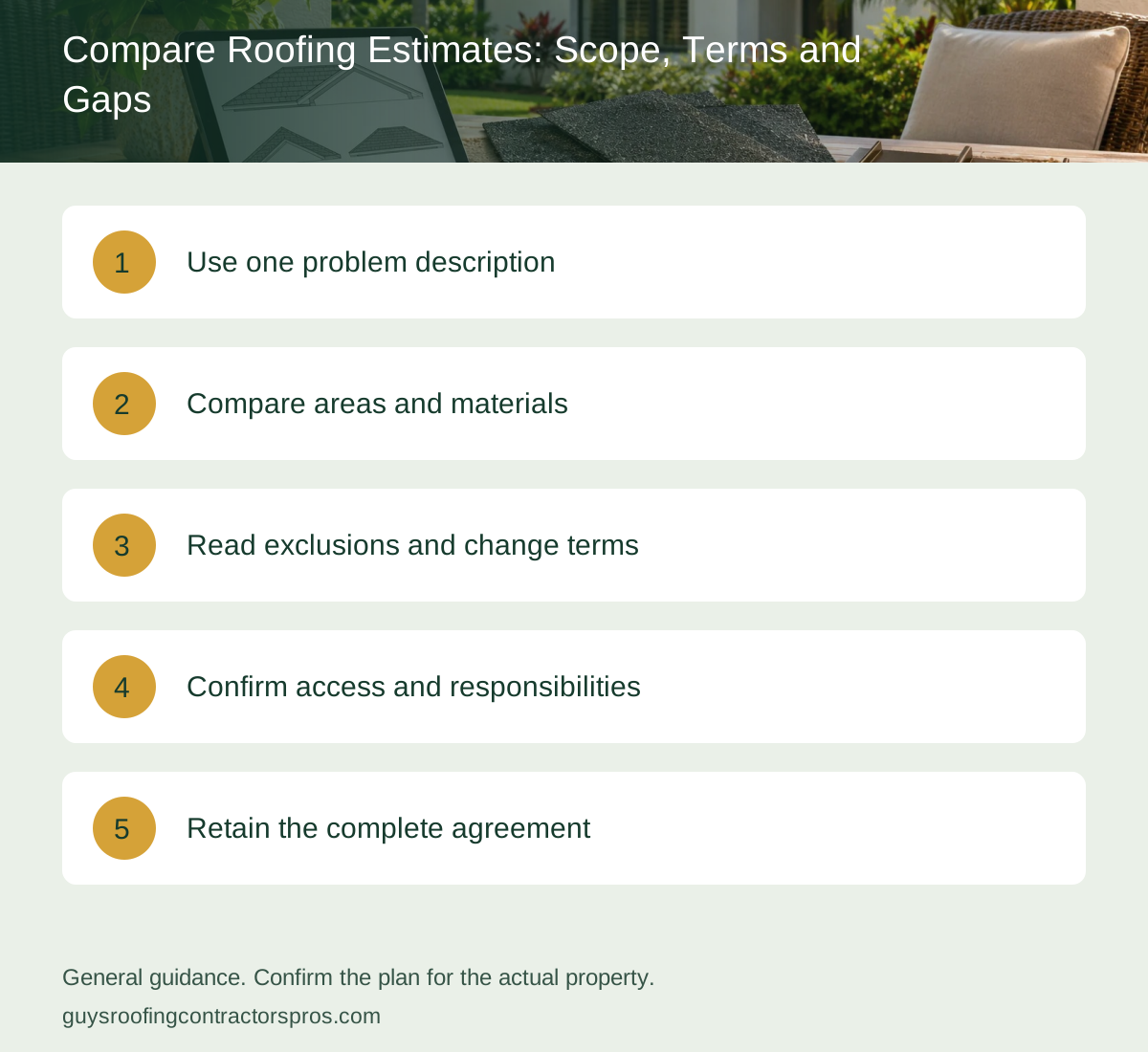
Give every contractor the same property address, concern, and available roof history. If you describe a small leak to one person and ask another for complete replacement, their proposals will naturally answer different questions. Note whether the purpose is to resolve a defined defect, renew an aging system, or install a roof associated with new work. Keep photographs and earlier repair scopes together when they help explain the concern. Ask each assessor to describe the findings supporting the recommendation. This gives the comparison a common starting point while still allowing a professional to identify a different condition or explain why the original request needs a broader discussion.
What work area does each proposal include?
Mark the roof sections and adjoining details included in each estimate. Ask whether the scope covers the whole building, a single slope, a defined junction, or another limited area. Identify any separate building or addition that might otherwise be assumed to be included. The description should be understandable enough to point to the intended work on a plan or photograph. If one contractor proposes a repair and another proposes replacement, record the evidence behind each recommendation rather than trying to compare only their totals. A defined boundary also makes it easier to understand which later concern may fall outside the work that was originally authorized.
Identify the system and the preparation
A material description should be specific enough to compare. Ask for the proposed product or system and the preparation needed for the existing roof. Clarify removal, treatment of relevant details, disposal, and any work around penetrations or adjoining components. Do not assume that a familiar material name means every proposal includes the same underlying work. If substitutions are possible, ask how they will be approved. The Federal Trade Commission recommends written estimates describing the work and materials, and advises asking for an explanation when estimates differ greatly. That approach helps turn a broad phrase such as complete roof into a list of actual tasks and responsibilities.
Make exclusions and uncertainty visible
Read the exclusions alongside the included work. An item left outside the scope may still be necessary for the building, but assigned to another party or priced separately. Ask what cannot be confirmed until work opens the roof, how a finding will be documented, and who can approve a change. Clarify whether a unit price or another pricing method applies to additional work when appropriate. Keep agreed changes with the original proposal. A clear change process is more useful than either assuming concealed damage cannot exist or accepting an undefined promise that every possible issue is already covered by the original total.
Compare the practical site arrangements
Roof work needs a plan for access, deliveries, parking, occupants, and other activity around the property. Ask where equipment or materials will be placed and which areas may need to remain clear. Mention gates, pets, shared driveways, and operating requirements before accepting a sequence that depends on unrestricted access. For a commercial property, identify the contact responsible for tenant or operational notices. If another trade is involved with equipment or roof penetrations, clarify who coordinates that interface. These details can change how work is organized even when two proposals name the same roofing system. They belong in the project discussion before a convenient date becomes the main deciding factor.
Check contractor information and written terms
The Federal Trade Commission advises checking relevant contractor licensing and insurance information and reading the agreement carefully. Request the details applicable to your project rather than treating a logo, review, or website statement as the document itself. Confirm the contracting party, contact information, payment sequence, estimated timing, and any written coverage terms. Product and workmanship provisions may differ, so read both when they apply. Do not sign an agreement with unresolved blank spaces or rely on a promise that a missing term will be explained later. This website does not establish a particular contractor credential or warranty; those must be confirmed with the appropriate records for the work.
Build a comparison sheet with the unanswered questions
Use a simple table with one column per proposal and rows for condition findings, work area, materials, preparation, exclusions, additional work, site access, timing, and written terms. Mark an unclear item as unanswered instead of interpreting it in the contractor’s favor or against them. Ask the same short question of each provider. A useful answer identifies the actual task or responsibility and can be added to the scope. Keep subjective impressions separate from the documents. Clear communication matters, but it should support a verifiable agreement rather than replace it. The exercise is complete when you can describe each proposal accurately without guessing at what a broad label includes.
Bring a clear request to the local office
For a Guys Roofing Contractors inquiry, share the property address, the roof concern, and whether you are comparing repair, replacement, or installation. Ask what assessment is needed and how a written scope will be prepared. The replacement service page explains condition and preparation questions, while the location directory identifies the correct local phone and hours. Keep your comparison sheet after selecting a provider so it can be checked against any proposed change and the final work record. The most useful estimate is one that connects evidence from the roof with a defined plan you understand, including its limits, rather than simply producing a total that looks reassuring. Keep the unresolved questions visible until the written agreement answers them clearly.
For the property-specific next step, discuss roof replacement with the office shown in the Central Florida location directory. More preparation advice is available in the Blog.