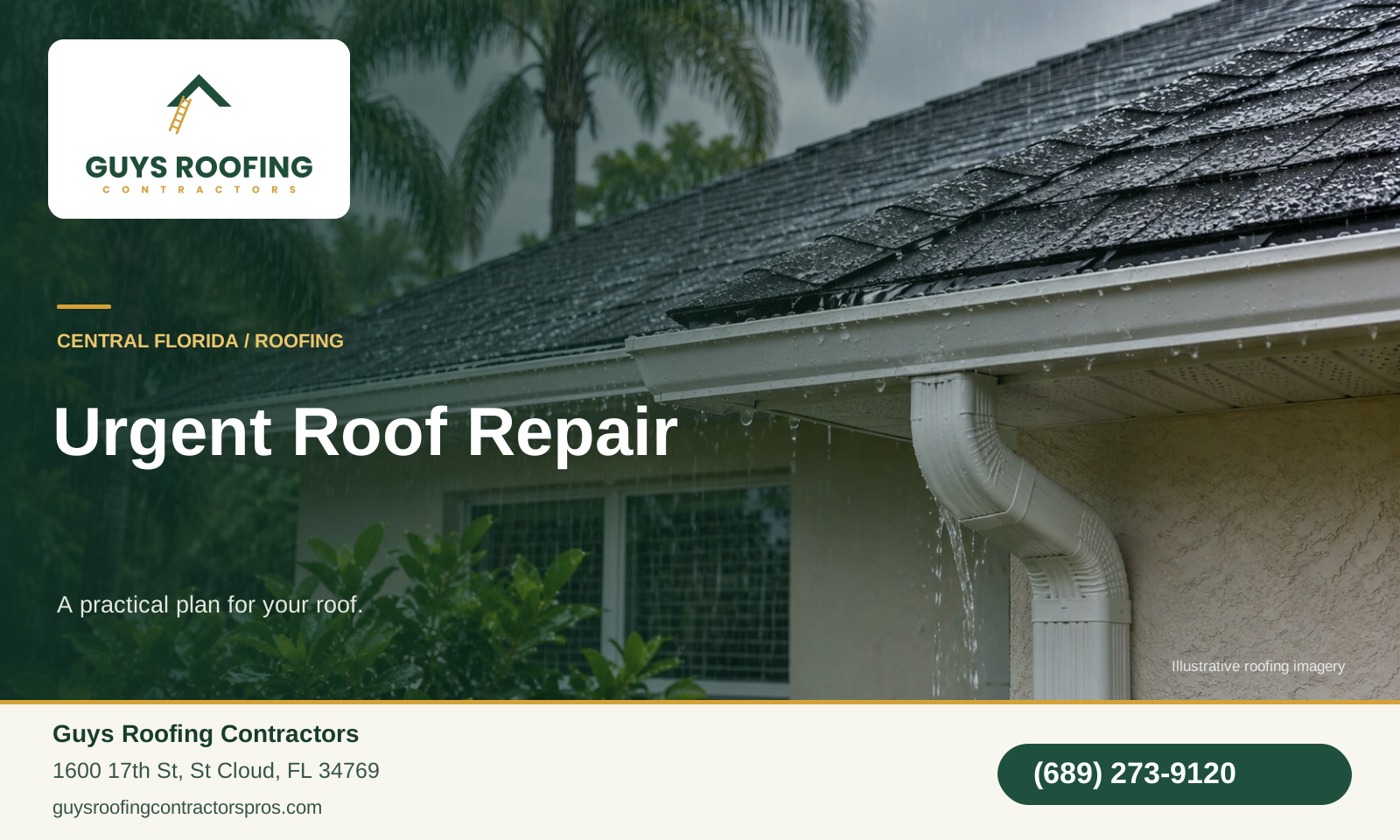
For sudden roof damage or active water entry, call the local Guys Roofing Contractors office and explain the situation. Current availability and any temporary protection must be confirmed directly. The published office hours vary, and this website does not promise immediate dispatch or a round-the-clock response at every location.
Put people and immediate hazards first
A roofing inquiry is not a substitute for emergency assistance. Keep people away from unstable ceilings, damaged structures, exposed electrical hazards, and fallen power lines. If there is an immediate threat to life or safety, contact emergency services or the relevant utility. Do not climb onto a storm-damaged roof or work outside while lightning threatens. Wait in a safe location and make the initial call from there. Describe the hazard honestly so the office can understand the concern without asking you to inspect a dangerous area or attempt temporary work yourself.
Explain what is happening now
Tell the office whether water is actively entering, which part of the building is affected, and whether the situation is changing. Give the property address, callback number, and any safe access information. Distinguish a newly damaged covering from a long-standing leak that has become worse. If the problem followed a storm, note the approximate timing without assuming the cause. Safe photographs can support the conversation, but a lack of pictures should not delay reporting a concern. Ask what the office can currently arrange and what information it needs next.
Separate temporary protection from permanent work
A temporary measure, when suitable and safely available, has a different purpose from a completed permanent repair. Ask what the proposed step is intended to protect, its limitations, and what later assessment remains necessary. The permanent scope should address the identified defect and the surrounding roof condition. Do not assume that an initial response includes every repair, interior restoration, or insurance-related task. Clarify responsibilities and any fees before authorizing work. Keep the details of temporary and permanent work separate in your records so the status of the roof remains clear.
Keep evidence and confirm the follow-up plan
Record the time you noticed the problem and preserve earlier maintenance or repair information. Photograph damage only from a safe position and avoid moving hazardous materials to create a clearer picture. If another party needs documentation, ask the contractor what record can be provided without assuming a coverage outcome. Confirm who will contact you about the next assessment and which number to use if conditions change. After the urgent concern has been addressed, request a written explanation of completed work and remaining recommendations. A clear follow-up plan matters as much as the initial conversation.
General roofing guidance: GAF repair and replacement guidance. A professional should assess the actual property.
Compare the related repair or replacement guide and explore the complete roofing service directory when planning the next question.